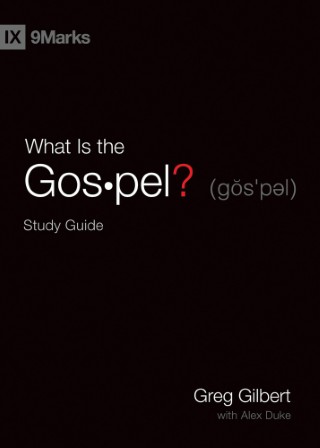
The church that I am attending began a book of the month club this summer. This month’s installment is What is the Gospel? By Greg Gilbert.
The book is only 8 chapters. Much of it is very good and I have no complaints but chapters 6 & 7—which are built on each other—are simply cringe worthy. Chapter 7 is what my math teacher used to call, “error carried forward.” Since chapter 6 is wrong then the premise used to introduce chapter 7 is wrongly stated.
Chapter 1 establishes the Bible as God’s authority
Chapter 2 is God the Creator
Chapter 3 is man’s rebellion
Chapter 4 is Jesus as our substitute
Chapter 5 is our response to God’s offer of salvation
Chapter 6 is about God’s Kingdom.
Chapter 7 is focusing on the gospel
Chapter 8 is entitled “The Power of the Gospel”
Chapter 6 starts out with a lot of promise, but it ends up like a line drive hit that curves foul just as you are rising to your feet to cheer the home run.
The author established that the Kingdom of God is a now thing, not just a future reality. This is a direct rebuttal of the Premillennial Dispensationalist position that claims the Kingdom of God is a future thing because the Jewish leaders in Jesus’ day rejected the offer, so God had to go to Plan B, the Church. This view is unbiblical but widely held by many, including a number of folks in my congregation. The idea that man’s free will can thwart God’s plan is heresy. (More proof Scofieldism is the cultural sin of the modern American evangelical church.)
However, instead of saying that Jesus should be Lord of every area of our lives because God is Savior of the whole man, reversing the curse of creation, he pivots to “me and God are a majority”. The Kingdom of God is reduced from its rightful place to a claim that the Gospel is only concerned with saving your soul. He pivots to some sort of pietism, Gnostic form of salvation, or some strange version of amillennialism.
In the Book of Daniel, the Kingdom is described as a rock that smashes the world empires and grows into a mountain that fills the whole earth. In another chapter Gilbert even quotes the verse about the knowledge of the Lord covering the earth as the waters cover the sea but in the final analysis, he balks at the truth of the Scripture and goes in a wrong direction.
I must attribute this error to the fact that he nowhere mentions that God rules in terms of covenantal institutions. Scripture has at least four governments established by God that he rules through, self-government, family, church, and the state.
Thus, in chapter 7, Gilbert mocks the idea that the Gospel not only transforms individuals but also cultures. Biblical transformation is bottom-up while evangelicals try top-down political change—which is not the same thing.
To quote a book that I read last week, “the Kingdom of God is Christian civilization.” Jesus commands us in the Great Commission to disciple the nations not just individuals. God demands that every area of our life be subject to his Lordship. This includes your family, your job, your spare time, your church, your city, county, province, state, nation. Plus, education, arts, music, media, entertainment, everything.
Jesus is Lord of all. The Gospel is an all or nothing proposition. No part of your life can be held back from Him. The “fair exchange” is only valid if we die to ourselves in everything, only then can he give us his life.
We don’t just add Jesus to our lives the way some career women add a husband to their lives or buy a new pair of shoes. Jesus isn’t here to make your life complete. Such a view is a lie. Jesus is here to make dead people live. That thinking is very foreign to most Americans, even those sitting next to us in church.
Greg Gilbert checks the boxes for what God did for us in salvation, but he totally muffs it in regard to what salvation is all about. The comprehension of what salvation does to individuals, churches, and communities is dismissed as irrelevant in his book. This reduction of Christianity makes salvation some Gnostic, pietistic, or otherworldly thing that doesn’t transform every part of a Christian’s life.
The old saying to “give your heart to Jesus but your ass belongs to the United States Army” is a lie. Jesus claims lordship over the Army too. And not just ours, but every army in every country belongs to him.
Jesus is ruling from heaven, but he rules all the affairs of men and has for a very long time. Gilbert misses this aspect of the Kingdom and reduces it to some ethereal, spiritual thing with no reality in this present world.
Gilbert’s book will get you to the Cross of Christ but not beyond that point; for that you must look elsewhere.